Using an electric toothbrush can make daily oral hygiene easier, but the device itself is only part of the equation. Your brushing technique, pressure, timing, and consistency all affect how effectively you clean your teeth and gums.
If you are new to electric toothbrushing, you may wonder whether you should move the brush like a manual toothbrush, how much pressure to use, or how long you should spend on each area.
The good news is that electric toothbrushes are designed to do much of the brushing movement for you. Instead of scrubbing aggressively, focus on positioning the brush correctly and slowly guiding it across each area of your mouth.
How to Brush Your Teeth With an Electric Toothbrush
The best electric toothbrushing technique is gentle, systematic, and thorough.
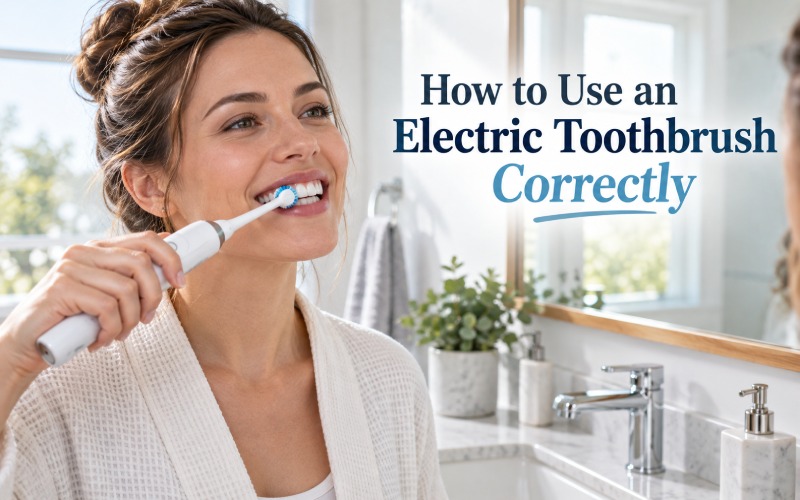
Start by applying fluoride toothpaste to the brush head. Place the bristles against your teeth near the gumline, then switch the toothbrush on. Allow the powered brush head to perform its normal movement rather than manually scrubbing back and forth with force.
Move gradually from one section of your mouth to another. Make sure you clean:
- The outer surfaces of your teeth
- The inner surfaces
- The chewing surfaces
- Areas along the gumline
- Hard-to-reach back teeth
Spend enough time on every section instead of repeatedly brushing only the teeth that are easiest to reach.
Most dental organizations recommend brushing for approximately two minutes twice a day with fluoride toothpaste.
How to Hold an Electric Toothbrush
Holding the toothbrush correctly helps you avoid excessive pressure.
Use a relaxed grip rather than squeezing the handle tightly. Position the bristles so they reach the teeth and gumline comfortably.
Unlike manual brushing, you generally do not need to scrub aggressively. Move the brush slowly from tooth to tooth and allow the powered bristles to work.
If your toothbrush includes a pressure sensor, pay attention to its warning. A pressure indicator can help you recognize when you are pressing too hard.
Should You Use Circular Motions With an Electric Toothbrush?
The answer depends on the type of electric toothbrush you use.
Many powered toothbrushes are designed to produce their own cleaning movement, so extensive manual scrubbing is unnecessary. With these brushes, gently guiding the brush head across the teeth is usually more appropriate than vigorously moving it back and forth.
Follow the manufacturer’s instructions for your specific toothbrush because brushing methods can vary between oscillating-rotating and sonic models.
The main goal is not to create a particular motion. It is to consistently clean all tooth surfaces while using gentle pressure.
Step-by-Step Electric Toothbrushing Technique
A simple routine can make brushing more consistent.
Step 1: Apply Fluoride Toothpaste
Use a fluoride toothpaste and place an appropriate amount on the brush head.
Step 2: Start at the Gumline
Position the bristles near where the teeth meet the gums. Keep the brush comfortable and avoid pressing it forcefully into the tissue.
Step 3: Clean One Section at a Time
Divide your mouth into manageable sections. Slowly guide the brush over the outer, inner, and chewing surfaces.
Step 4: Pay Attention to Back Teeth
Molars can be easy to overlook. Carefully clean their chewing surfaces and the areas around them.
Step 5: Follow the Two-Minute Timer
If your electric toothbrush has a built-in timer, use it. Many models divide the brushing period into intervals to encourage more even coverage.
Step 6: Rinse and Clean the Brush
After brushing, rinse the brush head and allow it to dry appropriately according to the manufacturer’s instructions.
Tips for More Effective Electric Toothbrushing
Small changes can significantly improve your daily routine.
Don’t Press Too Hard
More pressure does not necessarily mean cleaner teeth. Aggressive brushing can irritate the gums and contribute to tooth surface wear.
Let the toothbrush do the work.
Brush for Two Minutes
A complete two-minute brushing session makes it easier to give sufficient attention to every area of the mouth.
Brush Twice a Day
Consistency is one of the most important parts of oral hygiene. Brush twice daily with fluoride toothpaste unless your dental professional recommends a different routine.
Replace the Brush Head When Needed
Follow the manufacturer’s replacement instructions. Many toothbrush manufacturers recommend replacing brush heads approximately every three months or sooner if the bristles become visibly worn.
Don’t Forget Your Gumline
Plaque can accumulate where teeth and gums meet. Position the brush carefully around this area without applying excessive pressure.
Clean Hard-to-Reach Areas
Pay special attention to back molars and other areas that are difficult to reach.
Keep Your Brush Clean
Rinse the brush head after use and store it in a way that allows it to dry between uses.
Benefits of Using an Electric Toothbrush
Electric toothbrushes can be useful for many people when used correctly.
Research has found that powered toothbrushes can provide benefits for plaque removal and gingival health compared with manual brushing in some circumstances.
Better Brushing Consistency
Built-in timers can help users brush for the recommended amount of time.
Pressure Assistance
Some models include pressure sensors that alert users when they are brushing too forcefully.
Helpful for Limited Dexterity
People who have difficulty making repetitive hand movements may find powered toothbrushes easier to operate than manual toothbrushes.
Multiple Cleaning Modes
Depending on the model, users may have access to settings designed for sensitive teeth, gum care, deep cleaning, or other purposes.
Electric vs. Manual Toothbrushes
Both manual and electric toothbrushes can be effective when used properly.
The biggest difference is that an electric toothbrush performs much of the brushing movement automatically. This can make maintaining a consistent technique easier for some users.
| Feature | Electric Toothbrush | Manual Toothbrush |
|---|---|---|
| Powered movement | Yes | No |
| Built-in timer | Common on many models | Usually unavailable |
| Pressure sensor | Available on some models | No |
| Initial cost | Usually higher | Usually lower |
| Charging required | Some models | No |
| Technique required | Yes | Yes |
The most important factor is not simply whether your toothbrush is electric or manual. Regular, thorough brushing with fluoride toothpaste is essential.
Common Electric Toothbrushing Mistakes
Even with a powered toothbrush, certain habits can reduce cleaning effectiveness.
Using Too Much Pressure
Pressing hard can irritate the gums and may contribute to tooth wear.
Moving Too Quickly
Rushing across the teeth can cause some areas to receive very little attention.
Ignoring the Inner Surfaces
People sometimes focus mainly on the visible front surfaces. The inner surfaces need attention too.
Forgetting the Back Teeth
Molars are particularly important because their grooves and surfaces can collect plaque and food particles.
Brushing for Too Little Time
A quick brushing session may not provide enough time to thoroughly clean the entire mouth.
Neglecting Other Oral Hygiene Practices
Toothbrushing is only one part of oral care. Cleaning between teeth and attending regular dental checkups are also important.
Can Electric Toothbrushes Be Used for Sensitive Teeth?
Yes. Many electric toothbrushes offer gentle or sensitive settings, which may be useful for people who experience discomfort while brushing.
However, tooth sensitivity can have several causes, including exposed dentin, gum recession, tooth decay, worn enamel, or other dental problems.
If sensitivity is persistent, severe, or getting worse, speak with a dentist rather than simply changing brushing settings.
How Often Should You Replace an Electric Toothbrush Head?
The replacement schedule depends on the toothbrush manufacturer and the condition of the bristles.
As a general guideline, many manufacturers recommend changing the brush head around every three months. Replace it sooner if the bristles become frayed, flattened, or visibly worn.
A worn brush head may not clean as effectively as a new one.
Can an Electric Toothbrush Damage Your Gums?
An electric toothbrush itself does not automatically damage your gums. Problems are more likely when someone uses excessive pressure, brushes aggressively, or uses a worn brush head.
A gentle technique is important.
If your gums regularly bleed, swell, become painful, or recede, consult a dental professional. Persistent gum bleeding should not simply be assumed to be a normal consequence of using an electric toothbrush.
Frequently Asked Questions
How do I use an electric toothbrush for the first time?
Read the manufacturer’s instructions, apply fluoride toothpaste, place the brush head against your teeth, and turn it on. Slowly guide it from one section of your mouth to another while using gentle pressure.
What is the best electric toothbrushing technique?
The best technique involves gently positioning the brush near the gumline, allowing the powered brush to perform its cleaning movement, and systematically covering the outer, inner, and chewing surfaces of every tooth.
Should I move an electric toothbrush back and forth?
You generally do not need to scrub aggressively. Depending on the brush design, gently guide the brush head from tooth to tooth and follow the manufacturer’s recommended technique.
How long should I brush with an electric toothbrush?
Aim for about two minutes per brushing session, generally twice a day, unless your dental professional recommends otherwise.
How often should I replace an electric toothbrush head?
Many manufacturers recommend replacing brush heads approximately every three months, but follow the specific instructions for your toothbrush and replace the head sooner if the bristles become worn.
Can I use an electric toothbrush if I have sensitive teeth?
Yes. Many electric toothbrushes include sensitive or gentle settings. If sensitivity continues or becomes painful, consult a dentist to identify the underlying cause.
Is an electric toothbrush better than a manual toothbrush?
Powered toothbrushes can provide advantages for plaque control and may make consistent brushing easier for some people. However, both powered and manual toothbrushes can be effective when used correctly and consistently.
Conclusion
The best electric toothbrushing technique is not about brushing harder or faster. It is about using gentle pressure, positioning the brush correctly, and giving every area of your mouth enough attention.
Use fluoride toothpaste, brush for around two minutes twice a day, clean all tooth surfaces, and replace the brush head when it becomes worn. If your toothbrush includes a timer or pressure sensor, use these features to improve your technique.
An electric toothbrush can be a useful addition to your oral-care routine, but it works best when combined with daily cleaning between the teeth and regular professional dental care. If you experience persistent bleeding, pain, sensitivity, or other changes in your mouth, speak with a qualified dental professional.