
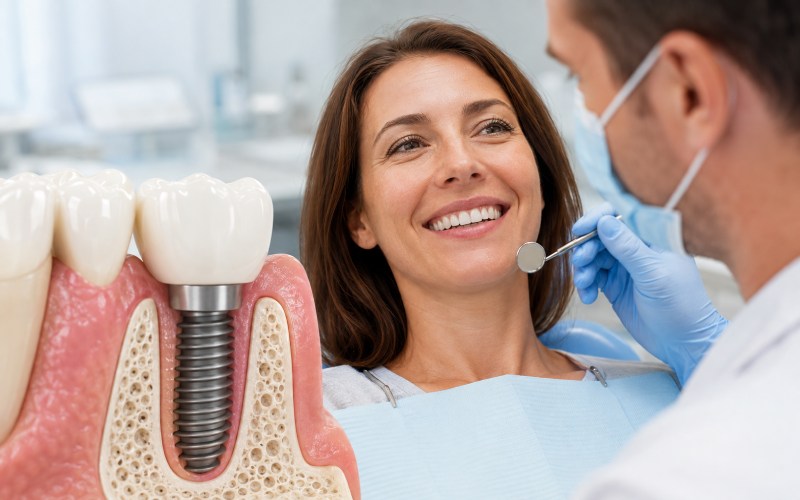
Losing a tooth can affect much more than your smile. Missing teeth can make chewing difficult, influence speech, change how your remaining teeth come together, and affect confidence. Over time, tooth loss can also contribute to changes in the jawbone and surrounding oral structures.
Dental implants have become one of the most established options for replacing missing teeth. Unlike traditional dentures, implants are anchored into the jawbone and can support a crown, bridge, or denture.
But are dental implants worth it for long-term oral health?
The answer depends on your oral health, the condition of your jawbone and gums, your expectations, your budget, and the alternatives available to you. Dental implants can offer excellent long-term results, but they are not automatically the best choice for every patient.
What Are Dental Implants?
A dental implant is a small post, commonly made from titanium or another biocompatible material, that is placed into the jawbone to replace the root portion of a missing tooth.
Once the implant has healed and integrated with the surrounding bone, it can support a dental restoration such as a crown.
A typical implant restoration may involve three main components:
- Implant: The artificial tooth-root component placed in the jawbone.
- Abutment: A connector that attaches the implant to the restoration.
- Crown: The visible tooth-shaped restoration placed on top.
The process of bone integration is known as osseointegration. Successful integration gives the implant stability and allows it to function as a foundation for the replacement tooth.
Unlike a traditional dental bridge, an individual implant generally does not require the neighboring teeth to be reshaped for support.
Are Dental Implants Good for Long-Term Oral Health?
For suitable candidates, dental implants can provide important long-term benefits.
However, the implant itself is only one part of the treatment. Long-term success also depends on the health of the gums and bone surrounding it, oral hygiene, regular dental care, lifestyle factors, and the quality of the restoration.
Some of the potential long-term advantages include improved chewing function, stable tooth replacement, preservation of bone around the implant site, and reduced dependence on removable prosthetics.
Improved Chewing and Function
A missing tooth can make it harder to chew certain foods comfortably. A properly restored implant can provide a stable foundation for a replacement tooth.
Because the restoration is anchored rather than simply resting on the gums, it can feel more secure than some removable alternatives.
The exact experience varies from person to person, and adaptation can take time after treatment.
Support for Jawbone Preservation
One of the important differences between implants and some other tooth-replacement options is their relationship with the jawbone.
When a natural tooth is lost, the bone that previously supported its root may gradually shrink because it no longer receives the same stimulation.
A dental implant is placed into the jawbone and can provide functional stimulation at the implant site. This can help preserve bone around the implant compared with leaving the area without a tooth root replacement.
However, an implant cannot necessarily prevent every type of bone loss. Existing bone loss, gum disease, infection, and other oral health conditions can affect the outcome.
Protection of Adjacent Teeth
Traditional bridges generally rely on neighboring teeth for support. Depending on the type of bridge, those teeth may need to be prepared.
An individual dental implant can replace the missing tooth without using adjacent healthy teeth as the primary support.
This can be an important consideration when comparing treatment options.
Natural-Looking Results
Modern dental crowns can be designed to closely resemble natural teeth in shape, color, and proportion.
When the implant, surrounding gums, and crown are properly planned, the final restoration can blend naturally with the rest of the smile.
The cosmetic result depends on factors such as the position of the implant, gum health, bone volume, restoration design, and individual healing.
How Long Do Dental Implants Last?
Dental implants are designed to be a long-term tooth-replacement solution, but they should not be considered completely maintenance-free or guaranteed to last forever.
The implant itself can remain functional for many years, while the crown or other restoration may eventually require repair or replacement due to normal wear.
Long-term success depends on factors including:
- Daily brushing and flossing
- Regular professional dental cleanings
- Healthy gums
- Avoiding tobacco use
- Managing conditions that affect healing
- Wearing a night guard when recommended
- Avoiding excessive forces such as chewing very hard objects
- Attending regular dental examinations
Good maintenance is particularly important because inflammation around an implant can damage the tissues supporting it.
What Is Peri-Implantitis?
Peri-implantitis is an inflammatory condition affecting the tissues around a dental implant. It can be associated with infection, bone loss, and eventual implant instability if left untreated.
This is one reason implant care does not end once the crown is placed.
Patients should continue to:
- Brush twice daily
- Clean between teeth and around the implant
- Attend recommended dental appointments
- Follow professional cleaning instructions
- Report bleeding, swelling, pain, or changes around the implant
Maintaining healthy gums is an important part of protecting the long-term performance of an implant.
Dental Implant Costs: Are They Worth the Investment?
Cost is one of the biggest factors people consider when deciding whether dental implants are worthwhile.
Implants often have a higher initial price than removable dentures or some types of bridges. However, comparing only the upfront price does not provide the complete picture.
When evaluating the cost, consider:
- Implant placement
- Diagnostic imaging
- Bone grafting if required
- Abutment
- Crown or other restoration
- Temporary restoration, if needed
- Follow-up appointments
- Future maintenance or restoration replacement
A less expensive treatment initially may require adjustments, repairs, or replacement over time.
On the other hand, implants may require fewer major interventions after successful healing, although routine maintenance remains necessary.
The right financial comparison should therefore consider the expected lifespan, maintenance requirements, clinical suitability, and long-term goals of each option.
Dental Implants vs. Dentures
Dentures are removable appliances designed to replace multiple missing teeth or an entire arch.
Dental Implants
Potential advantages:
- Fixed in place
- Stable during chewing
- Can provide a natural-feeling restoration
- May help preserve bone at the implant site
Potential disadvantages:
- Higher initial cost
- Requires surgery
- Treatment can take several months
- Not suitable for every patient
Dentures
Potential advantages:
- Generally less expensive initially
- No implant surgery required
- Can replace many teeth relatively quickly
Potential disadvantages:
- Can move or become loose
- Require regular maintenance
- May need adjustment as the mouth changes
- Do not replace tooth roots
Neither option is universally better. The appropriate choice depends on your oral health, preferences, anatomy, finances, and treatment goals.
Dental Implants vs. Dental Bridges
A dental bridge can replace one or more missing teeth by using neighboring teeth or implants as support.
Implants
An implant can replace the missing tooth root and support an individual crown without relying primarily on adjacent natural teeth.
Bridges
A traditional bridge may provide a faster restoration and can be less invasive than implant surgery in some situations. However, it typically requires support from neighboring teeth.
Your dentist can evaluate the condition of the surrounding teeth and explain which option offers the better long-term outlook for your specific situation.
When Are Dental Implants Not the Best Choice?
Dental implants can be highly successful, but there are situations where another treatment may be preferable.
For example, implants may require additional planning when a patient has:
- Significant bone loss
- Active gum disease
- Poor oral hygiene
- Certain medical conditions affecting healing
- Heavy tobacco use
- Insufficient space or unfavorable anatomy
Some patients may need preliminary treatment before implant placement. This could include periodontal treatment, extraction of a damaged tooth, or bone grafting.
In other cases, preserving a natural tooth may be preferable to removing it and replacing it with an implant.
Can a Natural Tooth Be Saved Instead?
Whenever possible, preserving a healthy natural tooth is often an important consideration.
Depending on the cause and severity of the problem, treatments such as periodontal therapy, root canal treatment, crowns, or regenerative procedures may help preserve a natural tooth.
That does not mean natural teeth should always be saved at any cost. A severely damaged, infected, or non-restorable tooth may have a poor long-term prognosis.
The key question is whether the natural tooth can be predictably maintained in a healthy and functional condition.
A dental professional can assess the tooth and compare its expected prognosis with available replacement options.
Potential Risks of Dental Implants
Like any surgical treatment, dental implant placement carries potential risks.
Possible complications include:
- Infection
- Pain or swelling
- Implant failure
- Bone loss around the implant
- Nerve irritation or injury
- Sinus-related complications for some upper-jaw implants
- Delayed healing
- Problems with the crown or other restoration
The likelihood of complications varies depending on individual health, anatomy, surgical technique, oral hygiene, and other factors.
Smoking and poorly controlled health conditions that affect healing may also increase the risk of complications.
Before treatment, discuss your medical history, medications, tobacco use, and previous dental problems with your dental professional.
Who Is a Good Candidate for Dental Implants?
A good implant candidate generally needs adequate bone and healthy oral tissues or a treatment plan capable of addressing existing problems.
Important considerations include:
Healthy or Treatable Gums
Active gum disease should generally be addressed before implant placement because healthy supporting tissues are important for long-term stability.
Adequate Bone Support
The implant needs sufficient bone for stable placement. If bone volume is inadequate, bone grafting or another procedure may sometimes be considered.
Good Oral Hygiene
Patients need to maintain consistent oral hygiene after treatment. Poor plaque control can increase the risk of inflammation around implants.
Realistic Expectations
Dental implants can restore function and appearance, but they require healing, maintenance, and regular dental care.
Your dentist will consider all these factors before recommending treatment.
How to Improve the Long-Term Success of Dental Implants
Getting an implant is only the beginning. Proper aftercare can play an important role in maintaining the surrounding tissues and restoration.
Brush and Clean Around the Implant
Follow your dental professional’s instructions for brushing and cleaning between teeth and around the implant.
Attend Regular Dental Checkups
Regular examinations allow your dentist to identify inflammation, bone changes, or restoration problems before they become more serious.
Avoid Tobacco
Tobacco use can negatively affect oral tissues and healing. If you smoke or use other tobacco products, discuss cessation options with your healthcare professional.
Protect Your Teeth From Excessive Forces
If you grind or clench your teeth, your dentist may recommend a night guard to reduce excessive forces on the restoration.
Address Problems Early
Persistent bleeding, swelling, pain, looseness, or changes around an implant should not be ignored. Early assessment may prevent a minor issue from becoming more serious.
Are Dental Implants Worth It?
For many suitable patients, dental implants can be a worthwhile long-term investment because they combine stability, function, appearance, and support for the jawbone at the implant site.
However, the answer is not simply “yes” for everyone.
The value of dental implants depends on several factors:
| Factor | Why It Matters |
|---|---|
| Oral health | Healthy gums and supporting tissues improve the treatment outlook |
| Bone condition | Adequate bone is important for implant stability |
| Longevity | Implants can provide long-term tooth replacement when properly maintained |
| Cost | Higher upfront costs need to be compared with long-term maintenance |
| Comfort | Fixed restorations can provide greater stability than some removable options |
| Lifestyle | Oral hygiene, smoking, diet, and habits can affect long-term outcomes |
| Alternatives | Bridges, dentures, or tooth-preservation treatments may be better in some cases |
The best decision is one based on your individual dental condition rather than price or appearance alone.
Questions to Ask Your Dentist Before Getting an Implant
Before committing to treatment, consider asking:
- Is my natural tooth still possible to save?
- Am I a suitable candidate for an implant?
- Do I have enough bone for implant placement?
- Will I need a bone graft?
- How long will the entire treatment take?
- What will the complete treatment cost?
- What are the risks in my particular case?
- How should I care for the implant afterward?
- What alternatives are available?
- How often will I need follow-up appointments?
Getting clear answers can help you make a more informed decision.
Frequently Asked Questions
Are dental implants worth it?
Dental implants can be worth the investment for patients who need tooth replacement and are suitable candidates. Their durability, stability, function, and ability to replace the root portion of a missing tooth make them an important long-term treatment option.
How long can dental implants last?
Dental implants can function for many years, and some remain successful for decades. Their longevity depends on factors such as oral hygiene, gum health, lifestyle, overall health, implant position, and regular professional care. The crown may need replacement before the implant itself.
Do dental implants prevent bone loss?
Dental implants can help preserve bone around the implant site by replacing some of the function of a natural tooth root. However, they do not prevent all forms of jawbone loss.
Are dental implants better than dentures?
Neither option is automatically better for everyone. Implants generally provide a fixed and stable solution, while dentures can be more affordable and avoid implant surgery. Your dentist can help determine which option suits your needs.
Are dental implants better than bridges?
It depends on the condition of your teeth and gums. An implant can replace a missing tooth without relying on neighboring natural teeth for primary support, while a bridge can sometimes provide a faster and less invasive solution.
What are the main risks of dental implants?
Potential risks include infection, inflammation, implant failure, nerve-related complications, sinus complications in some cases, bone loss, and problems with the restoration. Your individual risk depends on your health and oral condition.
Can a natural tooth be saved instead of getting an implant?
Sometimes. If a natural tooth can be predictably restored and maintained, preserving it may be preferable. However, severely damaged or non-restorable teeth may require extraction and replacement.
Do dental implants require special care?
Dental implants require regular oral hygiene and professional dental care. Although they cannot develop cavities like natural teeth, the surrounding gums and bone can still develop problems if plaque and bacteria are not adequately controlled.
Conclusion
So, are dental implants worth it for long-term oral health?
For many people, they can be an excellent long-term option for replacing missing teeth. Dental implants can restore chewing function, provide a stable foundation for replacement teeth, and help maintain bone around the implant site. Their durability can also make them an attractive alternative to treatments that require more frequent adjustments or replacement.
However, dental implants are not automatically the right solution for every patient. Your gum health, bone condition, overall health, oral hygiene, budget, and the possibility of saving a natural tooth should all be considered before treatment.
The most reliable way to determine whether dental implants are worth it for you is to have a personalized evaluation with a qualified dental professional. A thorough examination can help you compare implants with bridges, dentures, or tooth-preservation treatments and choose the option that best supports your long-term oral health.