
Workplace Management EWMagWork: A Practical Guide to Better Workplaces
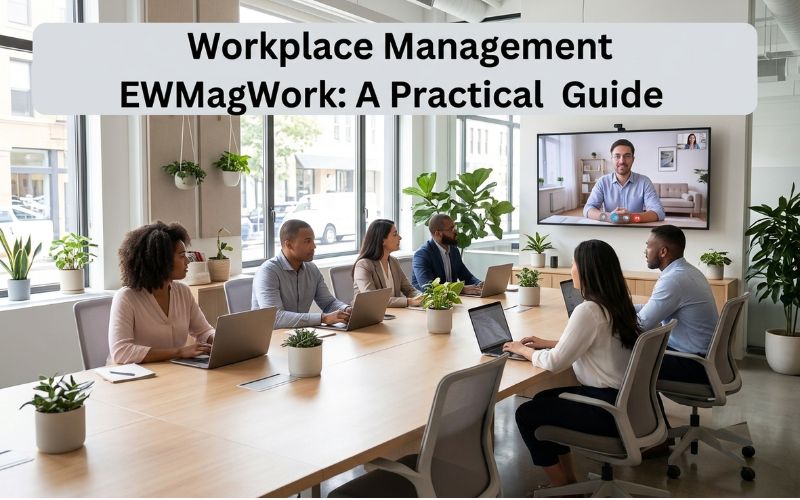
Modern workplaces are changing quickly. Employees may work from traditional offices, homes, shared spaces, or a combination of locations. At the same time, businesses are expected to improve productivity while supporting employee wellbeing, flexibility, sustainability, and effective communication.
This changing environment has made workplace management more important than ever.
Workplace management EWMagWork can be used as a practical way to think about how people, processes, technology, and physical workspaces work together. Rather than focusing only on office maintenance or daily administration, the approach considers the complete workplace experience.
Also Read : Spotify Offline Listening: MP3 Options and Legal Methods
What Is Workplace Management EWMagWork?
Workplace management EWMagWork refers to a people-focused approach to organizing and improving modern work environments.
The concept brings together several important areas, including:
- Employee experience
- Workspace planning
- Communication
- Technology
- Flexible working
- Workplace policies
- Productivity
- Sustainability
- Employee wellbeing
The central idea is straightforward: a workplace should make it easier for people to do their jobs effectively.
This means businesses need to look beyond desks, meeting rooms, and office equipment. They also need to consider whether employees have the right tools, clear responsibilities, suitable working conditions, and enough flexibility to perform well.
Why Workplace Management Matters
Poor workplace organization can create unnecessary problems.
Employees may waste time searching for information, dealing with unclear responsibilities, attending unnecessary meetings, or working with outdated systems. Physical workspace problems can create similar frustrations.
Effective workplace management helps address these issues by creating clearer systems and better working conditions.
A well-managed workplace can help organizations:
- Improve communication
- Reduce operational confusion
- Support employee productivity
- Make better use of office space
- Encourage collaboration
- Support flexible working
- Improve employee experience
- Reduce unnecessary workplace costs
The goal is not simply to make employees work faster. It is to remove obstacles that make good work unnecessarily difficult.
Core Principles of Workplace Management EWMagWork
1. Put People at the Center
Employees are one of the most important parts of any workplace strategy.
A people-focused workplace considers how employees actually use their environment and what they need to perform effectively.
This can include comfortable work areas, appropriate equipment, quiet spaces for focused work, collaboration areas, and reliable digital tools.
Employee feedback is also valuable because managers may not always see the everyday problems employees experience.
2. Build Flexible Workspaces
Modern teams often require different types of working environments.
One employee may need a quiet space for concentrated work, while another may need a meeting room for collaboration. Hybrid teams may also require technology that allows remote and office-based employees to participate equally.
Flexible workplace design can include:
- Shared workstations
- Private focus areas
- Collaboration zones
- Meeting rooms
- Informal discussion areas
- Video-conferencing spaces
The objective is to create a workplace that can adapt to different tasks rather than forcing every activity into the same environment.
3. Use Technology Strategically
Technology can simplify many workplace-management tasks, but adding more software does not automatically make a workplace better.
Businesses should choose technology based on actual needs.
Useful workplace technologies may include:
- Communication platforms
- Project management systems
- Meeting-room booking tools
- Desk-booking systems
- Cloud storage
- Employee feedback platforms
- Workplace analytics
- Digital scheduling tools
The best technology reduces unnecessary work rather than creating another layer of complexity.
4. Support Hybrid and Remote Teams
Hybrid work has changed how organizations think about workplace management.
A company may have employees working from different cities while still needing everyone to collaborate effectively.
For hybrid teams, businesses should establish clear expectations around:
- Communication
- Meeting schedules
- Availability
- Documentation
- Project ownership
- Remote collaboration
- Office attendance
Clear expectations help prevent confusion and ensure that remote employees are not unintentionally excluded from important discussions.
5. Improve Employee Wellbeing
Productivity should not be separated from employee wellbeing.
A workplace that constantly creates excessive stress, poor communication, or unreasonable workloads may struggle with long-term performance.
Workplace management should therefore consider factors such as:
- Workload balance
- Breaks
- Ergonomic workstations
- Healthy communication
- Reasonable expectations
- Opportunities for feedback
- Work-life boundaries
Supporting wellbeing does not mean ignoring business objectives. In many cases, a healthier working environment can help employees maintain consistent performance over time.
6. Create Clear Workplace Policies
Good workplace management requires clear rules and expectations.
Policies should explain how employees are expected to work while giving teams enough flexibility to handle different situations.
Depending on the organization, policies may cover:
- Flexible working
- Office attendance
- Health and safety
- Equipment use
- Communication
- Remote access
- Meeting practices
- Data security
- Workplace conduct
Policies should also be reviewed periodically to ensure that they still reflect how the organization actually operates.
7. Make Better Use of Office Space
Office space can be expensive, particularly in major business locations.
Simply adding more desks does not necessarily create a better workplace.
Organizations should examine how different areas are actually being used. If meeting rooms remain empty while employees struggle to find quiet work areas, the existing layout may not match employee needs.
Space planning can help businesses determine whether they need:
- More collaboration areas
- More private spaces
- Better meeting facilities
- Flexible desks
- Larger shared areas
- Improved technology
- Better storage
The goal is to make the workplace support the way employees actually work.
8. Include Sustainability
Sustainability is becoming an increasingly important consideration for organizations.
Workplace improvements can include practical measures such as:
- Energy-efficient lighting
- Better heating and cooling management
- Recycling systems
- Reduced paper consumption
- Efficient equipment
- Responsible purchasing
- Better use of natural light
Sustainable workplace practices can potentially reduce waste and operating costs while contributing to broader environmental goals.
How to Implement Workplace Management EWMagWork
A workplace-management strategy does not need to be introduced all at once.
A gradual process can make implementation easier.
Step 1: Assess the Current Workplace
Start by identifying what works and what does not.
Ask employees about common problems and review available workplace data.
Important areas to examine include:
- Employee satisfaction
- Workspace usage
- Technology
- Communication
- Productivity
- Workplace costs
- Remote-working challenges
Step 2: Identify Priorities
Not every workplace problem requires immediate attention.
Rank issues according to their impact on employees and business operations.
For example, improving unreliable communication systems may be more urgent than redesigning an office reception area.
Step 3: Set Measurable Goals
Clear goals make it easier to evaluate progress.
Examples include:
- Reducing meeting-room conflicts
- Improving employee satisfaction
- Increasing workspace utilization
- Reducing unnecessary administrative tasks
- Improving communication between departments
Step 4: Select Appropriate Tools
Choose technology that solves identified problems.
Avoid introducing multiple platforms that perform the same function. Employees are more likely to adopt systems that are simple, useful, and clearly explained.
Step 5: Communicate Changes
Workplace changes should be communicated before implementation.
Employees need to understand what is changing, why it matters, and how the change affects their daily work.
Training may also be necessary when new technology or processes are introduced.
Step 6: Measure and Adjust
Workplace management should be treated as an ongoing process.
Collect feedback, review performance, and make adjustments when necessary.
A system that works well today may need to change as the company grows or employee expectations evolve.
Workplace Management for Small Businesses
Workplace management is not only relevant to large corporations.
Small businesses can benefit from the same principles, although they may not need expensive workplace-management systems.
A small company could start with simple improvements such as:
- Clear team responsibilities
- Shared digital calendars
- Organized documentation
- Regular feedback
- Flexible work policies
- Better workspace organization
- Simple project-tracking tools
The size of the company does not determine whether workplace management is useful. The important factor is whether the system helps people work more effectively.
Common Workplace Management Mistakes
Even well-intentioned workplace strategies can fail.
Adding Too Many Tools
More technology can create more confusion if employees must constantly switch between platforms.
Ignoring Employee Feedback
Managers may design a workplace based on assumptions rather than actual employee needs.
Changing Everything at Once
Large-scale changes can overwhelm employees. A gradual implementation is often easier to manage.
Focusing Only on Productivity
Productivity is important, but employee wellbeing, communication, and sustainable workloads also matter.
Failing to Measure Results
Without measurable goals, it becomes difficult to determine whether workplace improvements are actually working.
Workplace Management and the Future of Work
Workplace management will continue to evolve as organizations adopt new technologies and working models.
Artificial intelligence, automation, workplace analytics, cloud collaboration, and smart-office technologies may increasingly influence how companies organize work.
However, technology will not eliminate the need for effective leadership.
Organizations will still need clear communication, thoughtful policies, employee feedback, and managers who understand how their teams work.
The strongest workplace strategies are likely to combine useful technology with a strong understanding of human needs.
Frequently Asked Questions
What is workplace management EWMagWork?
Workplace management EWMagWork can be understood as a practical approach to organizing people, processes, technology, and workspaces to create a more efficient and employee-friendly workplace.
Is EWMagWork workplace management software?
The term should not automatically be treated as the name of a specific workplace-management software product. It is better understood in this context as a workplace-management concept rather than a clearly established software platform.
How can workplace management improve productivity?
It can reduce confusion, improve communication, organize resources, support better workspace design, and provide employees with tools that make everyday work easier.
Is workplace management useful for remote employees?
Yes. Clear communication policies, digital collaboration tools, documentation, and flexible working practices can help remote employees stay connected and productive.
How can companies measure workplace-management success?
Companies can track factors such as employee feedback, productivity, workspace usage, operational costs, communication efficiency, and employee retention.
Final Thoughts
Workplace management is no longer simply about maintaining an office.
Modern organizations need to think about how people, technology, processes, and physical spaces interact. Workplace management EWMagWork provides a useful way to approach these areas together, with an emphasis on flexibility, employee experience, efficiency, and sustainable working practices.
The best strategy is not necessarily the most complicated one. Businesses can start by identifying everyday workplace problems, listening to employees, improving processes, choosing practical technology, and measuring the results.
When workplace management is designed around the real needs of employees and the organization, it can create a more productive, adaptable, and sustainable working environment.

You may also like ...





One thought on “Workplace Management EWMagWork: A Practical Guide to Better Workplaces”