Introduction
Numbers like 82.51×63 may look random at first glance, but in many industries, such formats often represent something meaningful—dimensions, ratios, or coded values.
From engineering to digital design, such numerical expressions are widely used in practical applications. But what exactly does 82.51×63 stand for?
Let’s break it down in simple terms and explore its possible real-world uses.
What Does 82.51×63 Mean?
At its core, 82.51×63 represents a multiplication or dimension format.
It can commonly refer to:
- Measurements (length × width)
- Aspect ratios in design
- Scaling values in engineering
- Resolution or size parameters in digital systems
The exact meaning depends on the context in which it is used.
Common Interpretations of 82.51×63
1. Physical Dimensions
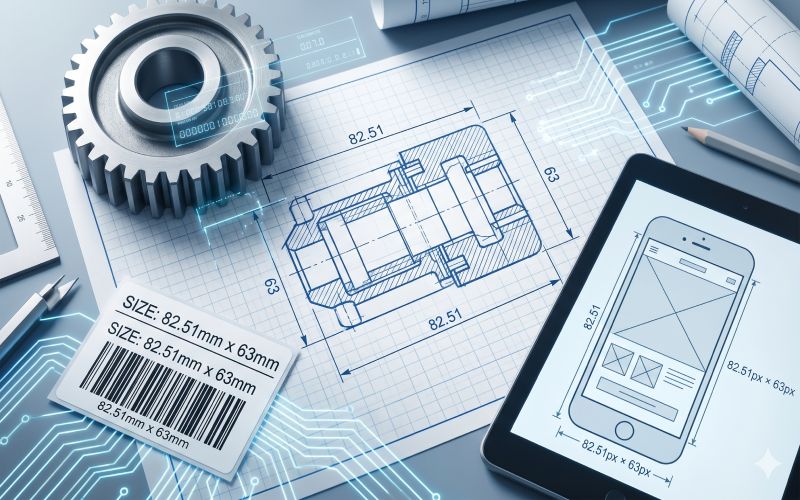
In manufacturing or design, 82.51×63 could represent:
- Size of a component (in mm or cm)
- Dimensions of a product
- Engineering specifications
For example:
- A mechanical part
- A printed label
- A packaging box
2. Digital Design and UI Layouts
In digital environments, such values may define:
- Image sizes
- Screen elements
- UI component dimensions
Designers often use precise measurements for pixel-perfect layouts.
3. Printing and Packaging Industry
Printing systems rely heavily on exact dimensions.
82.51×63 might be used for:
- Label sizes
- Card formats
- Custom packaging specifications
Even small variations can affect final output quality.
4. Engineering Calculations
Engineers use such formats for:
- Surface area calculations
- Material cutting sizes
- Blueprint specifications
Precision is critical, and numbers like these ensure accuracy.
Real-Life Examples You Didn’t Expect
Here are some surprising places where values like 82.51×63 may appear:
- Credit card or ID variations (custom sizes)
- Industrial machine parts
- Mobile UI components
- Product packaging labels
- 3D printing dimensions
Even everyday objects are designed using precise measurements like this.
Key Highlights
- 82.51×63 is a measurement or calculation format
- Used across engineering, design, and printing
- Meaning depends on context
- Ensures precision and accuracy
- Common in both physical and digital applications
Comparison: Different Uses of 82.51×63
| Use Case | Meaning | Industry |
| Dimensions | Length × Width | Manufacturing |
| Pixel Size | UI element size | Digital Design |
| Print Size | Label/card dimensions | Printing |
| Calculation | Area or scaling | Engineering |
Pros & Cons of Using Precise Measurements
Pros
- Ensures accuracy
- Improves product quality
- Enables standardization
- Reduces errors
Cons
- Requires precise tools
- Small mistakes can cause issues
- May vary by unit (mm, cm, pixels)
Why Understanding This Matters
Understanding numbers like 82.51×63 helps in:
- Making better product decisions
- Avoiding sizing mistakes
- Improving design accuracy
- Communicating specifications clearly
Whether you are a buyer, designer, or engineer, clarity in measurements is essential.
Final Verdict
82.51×63 is not a mysterious code—it is a practical numerical format used in multiple industries.
Its importance lies in precision. From product design to digital interfaces, such measurements ensure everything fits, functions, and performs as expected.
Before buying or designing anything, always check dimensions carefully—because even small numbers can make a big difference.
FAQs (Voice Search Friendly)
1. What does 82.51×63 mean?
It usually represents dimensions or a multiplication value depending on context.
2. Where is 82.51×63 used?
It is used in design, engineering, printing, and manufacturing.
3. Is 82.51×63 a standard size?
Not necessarily—it depends on the specific application.
4. Can it be used in digital design?
Yes, it can represent pixel dimensions or layout sizes.
5. Why are such measurements important?
They ensure accuracy, quality, and proper fit in products and designs.