George Washington Haircut: The Real Story Behind His Iconic Hairstyle
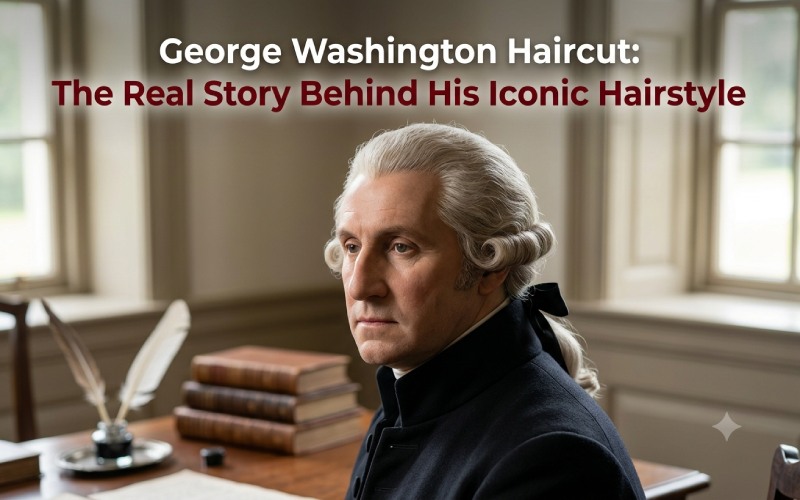
The George Washington haircut is one of the most recognizable hairstyles in American history. His powdered white hair, tied behind his head in a queue, appears in countless portraits, paintings, statues, and historical depictions.
But there is a common misconception about Washington’s famous appearance: he did not normally wear a wig.
George Washington kept his own hair long, pulled it back into a queue, and powdered it white. George Washington’s Mount Vernon specifically notes that although wigs were fashionable during his lifetime, Washington preferred to style and powder his natural hair instead.
So what exactly did his hair look like, why did he powder it, and how can we understand the hairstyle seen in his famous portraits?
Did George Washington Wear a Wig?
No. Despite the popular image of Washington with white hair, he generally did not wear a wig.
Instead, Washington kept his natural hair long and tied it back in a queue, which was essentially a long ponytail. He also powdered his hair to achieve the pale or white appearance associated with 18th-century gentleman’s fashion.
This distinction is important because wigs were extremely common among fashionable men during Washington’s lifetime. Mount Vernon notes that Washington’s own hair was styled to resemble the formal appearance associated with wigs.
What Did George Washington’s Hair Look Like?
Washington’s hairstyle changed somewhat throughout his life, but the basic elements of his mature appearance are well documented.
His natural hair was kept long and pulled backward into a queue. The front and sides were arranged and powdered, producing the formal appearance visible in many portraits.
As a young man, Washington had reddish hair. Mount Vernon specifically identifies him as a redhead in his younger years.
By the time of his presidency, his hair appeared white because it was naturally lighter with age and was also powdered according to the fashion of the period.
The Famous George Washington Curls
The curls around Washington’s ears and the sides of his head are another recognizable part of his appearance.
These curls were part of the formal men’s hairstyles of the 18th century. Hair could be curled, arranged, and powdered to create a polished appearance.
Historical hairdressing guides from the period describe men’s hairstyles featuring curls around the ears, raised or curled hair at the front, and long hair pulled into a queue.
Washington therefore was not simply wearing a modern “haircut.” His appearance was part of a much broader 18th-century grooming tradition.
Why Did George Washington Powder His Hair?
Hair powder was fashionable during Washington’s lifetime.
Powder helped create the pale appearance that became associated with formal men’s hairstyles during the 18th century. Washington followed this fashion while using his own hair.
Mount Vernon explains that Washington powdered his natural hair, giving it the iconic white appearance seen in portraits.
The powder also helped create the formal, carefully groomed appearance expected of gentlemen during the period.
George Washington’s Haircut and the Queue
The queue was one of the defining features of Washington’s hairstyle.
A queue involved pulling the longer hair toward the back of the head and securing it, often with a ribbon. Historical descriptions of Washington also refer to his hair being tied behind his head.
Mount Vernon records that Washington’s hair was arranged into its trademark queue or ponytail.
This is why many authentic depictions of Washington show a narrow section of hair extending behind his head rather than a modern short haircut.
What Did George Washington Look Like Without Powder?
Without the white powder, Washington’s natural hair would have looked very different from the familiar images seen on currency and in formal portraits.
As a young man, he had reddish hair. Over time, aging and his grooming practices changed its appearance. Mount Vernon also preserves examples of Washington’s hair and historical references that provide evidence about his actual hair rather than relying solely on paintings.
This helps explain why the modern image of Washington as a man with completely white hair can be misleading if interpreted as his natural appearance at every stage of his life.
Why Do People Think George Washington Wore a Wig?
The confusion largely comes from the visual appearance of his hair.
Wigs were common among wealthy and fashionable men in the 18th century, and Washington’s powdered, carefully styled hair looked similar to a formal wig.
His portraits also became extremely influential in shaping the way later generations imagined him.
For example, Gilbert Stuart’s famous portraits show Washington with powdered hair pulled back into a queue. Mount Vernon describes the portrait as one of the most widely recognized representations of Washington.
Because later generations became accustomed to seeing this formal white hairstyle, the assumption that Washington was wearing a wig became widespread.
George Washington Haircut in Historical Portraits
Portraits provide some of the best-known visual references for Washington’s hairstyle, although they should be understood alongside historical records and physical evidence.
In Gilbert Stuart’s famous portrait, Washington’s powdered hair is pulled backward into a queue decorated with a ribbon.
The Smithsonian’s description of a Washington statue also identifies his hair as being pulled back into a ponytail with curls near the neck.
Together, these depictions reinforce the basic features of the hairstyle:
- Long natural hair
- Powdered appearance
- Styled curls
- Hair pulled backward
- Queue or ponytail
- Ribbon or other fastening
Did George Washington Have His Hair Cut?
Washington’s hair was maintained and groomed rather than simply left untouched.
The important point is that the hairstyle was based on his natural hair, which was grown long enough to be styled into the formal queue popular among gentlemen.
Historical evidence also shows that Washington cared about grooming and presentation. His household records and historical accounts describe his hair being maintained and arranged in its characteristic style.
How Was the George Washington Hairstyle Created?
Creating an authentic 18th-century hairstyle required considerably more work than getting a modern haircut.
A simplified version of the process would involve:
- Growing the hair long enough to pull it backward.
- Arranging the front and sides into the desired shape.
- Creating curls around the sides and ears.
- Pulling the longer hair backward into a queue.
- Securing the queue with a ribbon.
- Applying hair powder to achieve the characteristic pale appearance.
Eighteenth-century hairdressing was a specialized practice, and historical sources describe elaborate methods for creating curls and maintaining formal hairstyles.
Can You Recreate the George Washington Haircut Today?
Yes. The hairstyle can be recreated for historical reenactments, theater productions, school events, museums, costume events, and educational programs.
A modern recreation does not necessarily need to use the exact grooming methods of the 18th century. Long hair can be styled with contemporary tools, while a historical wig can provide a faster alternative.
For the most recognizable appearance, focus on the main characteristics rather than trying to reproduce every historical detail:
- Long hair
- Side curls
- Powdered or white appearance
- Pulled-back queue
- Simple ribbon
George Washington Hair Wig vs. Natural Hair
A George Washington hair wig is often used in performances and reenactments because it provides the historical silhouette without requiring someone to grow their hair.
A wig can be particularly useful for:
- Historical reenactments
- School presentations
- Theater
- Museum programs
- Halloween costumes
- Educational demonstrations
- Historical photography
However, a wig recreates the appearance rather than representing what Washington himself actually wore.
Washington’s historical distinction is that he styled and powdered his own hair instead of relying on a wig.
Why the George Washington Hairstyle Remains Famous
Washington’s hairstyle has survived because it became part of his visual identity.
His portraits helped establish a recognizable image of the first U.S. president, and the powdered hair and queue became closely associated with that image.
The hairstyle also provides a useful reminder that fashion in the 18th century was very different from modern men’s grooming. What may look unusual today was considered formal and appropriate during Washington’s lifetime.
Frequently Asked Questions
Did George Washington really wear a wig?
No. Historical information from George Washington’s Mount Vernon states that Washington kept his own hair long, tied it into a queue, and powdered it rather than wearing a wig.
Was George Washington’s hair naturally white?
Not throughout his life. Mount Vernon notes that Washington was a redhead when he was young. His later white appearance was influenced by age and the practice of powdering his hair.
What was George Washington’s haircut called?
It was not a modern haircut with a specific barber-style name. His hair was worn long and pulled into a queue, or ponytail, with the front and sides styled and powdered.
Did George Washington curl his hair?
His hairstyle included curls around the sides, consistent with formal men’s hair fashions of the 18th century. Historical hairdressing sources describe curls around the ears and other elaborate arrangements used during the period.
Why did George Washington wear powdered hair?
Powdered hair was a fashionable form of formal grooming during his lifetime. Washington used powder on his natural hair, producing the white appearance visible in many portraits.
Can I recreate the George Washington haircut?
Yes. A long hairstyle can be arranged into curls and a queue, while a historical wig can be used for a quicker costume or reenactment solution.
Conclusion
The George Washington haircut was not actually a wig-based style. Washington kept his natural hair long, arranged it into a queue, styled the sides, and powdered it to create the formal appearance associated with fashionable gentlemen of the 18th century.
His famous portraits helped make this hairstyle one of the most recognizable historical looks in America. Today, the style remains popular in reenactments, theater, education, and costume events.
Understanding the real story behind Washington’s hair makes the hairstyle even more interesting: the iconic white appearance came not from a simple wig, but from the combination of natural hair, careful styling, a queue, curls, and hair powder.

You may also like ...